We use cookies to personalise site content, social media features and to analyse our traffic. We also share information about your use of this site with our advertising and social media partners.
FEATURED
SPONSORED
VERIFIED
Jan 12 -
7 minutes, 0 seconds
-1.8K Views 209 Comments 0 Likes 0 Reviews
After big disasters, people suffer, homes are gone, and communities are hurt. But history has also demonstrated to us that even in the worst times, recovery is possible. However, when we think of recovery from disaster it is not so much about the restoration of physical buildings, it should also be about the restoration of hope, building back stronger, as well as what we have learned to prevent losing more in the future.
All of us are familiar with the various stories of recovery from the trials and tribulations of nature's forces, and through those stories we have been reminded of hope, resilience, community growth and recovery. But it is examples of real disasters, from communities that have experienced hurricanes, earthquakes, wildfires, and other challenging experiences that tell us what really allows people to be successful in their recovery efforts.
This blog will highlight powerful examples of recovery efforts in communities from around the world. Together, we will share stories that focus on the lessons learned about leadership, community strength and preparation.
Disaster recovery is more than just the emergency response. While emergency responders are working on saving lives, disaster recovery starts when the hope of recovery begins, and goes through the long process of rebuilding houses, restoring services, and healing communities.
Disaster recovery includes some basic components:
If you want to learn how governments can improve their disaster preparedness, check out "How the Government Deals with Natural Disasters."
New Orleans was developed by the Hurricane Katrina disaster in 2005, now known as the most costly natural disaster in U.S. history. The hurricane caused a substantial loss of lives, displaced hundreds of thousands of residents, and a flooding event continuing to take months to repair, all of which cost the City of New Orleans billions. Many people thought the world was crashing down around them and there was no way of resuming life back to "normal".
But recovery did happen, slowly, and steadily. New Orleans invested in better flood protections, which included rebuilding the levee system to protect the citizens from other storms. Communities also stepped in, working together in local groups with many volunteers to help families regain their homes and begin rebuilding. The cultural normalcy brought about by New Orleans' music and recurring festivals of the city also became a pathway to inspiring people to have hope again.
Japan experienced one of its largest, most devastating earthquakes, with accompanying tsunami, in March 2011. Whole towns were swept away. The extent of destruction was compounded because the tsunami resulted in the Fukushima nuclear crisis. Millions of people were displaced, and the damage was astonishing.
Japan's recovery has become a model of resilience, even though the initial destruction caused paralysis among some. The so-called Best Practices for Recovery came from lessons learned in Japan's immediate emergency response capabilities, effective role by the government to organize and coordinate relief efforts, and a disciplined and orderly society. Extensive rebuilding projects did not only restore housing and infrastructure, but also included safety measures from earthquakes and tsunami in the future.
During Australia’s “Black Summer” of 2019 to 2020, bushfires burned millions of hectares of land, destroyed thousands of homes, and killed or displaced roughly three billion animals. Smoke from the fires drifted between continents, and many claimed this face was one of the more extreme wildfires in a very long time and possibly in the history of the planet.
The recovery phase showed the power of unity. The government provided financial aid to families and farmers, private donations poured in from national and global organizations. Communities worked together to rebuild homes and support mental health programs and wildlife habitat. Many areas implemented stronger fire prevention strategies, improved land management and better emergency alerting systems.
We also covered the important role of Disaster zones in such situations in our blog "Disaster Zones Around the World: Where Danger Strikes Most Often."
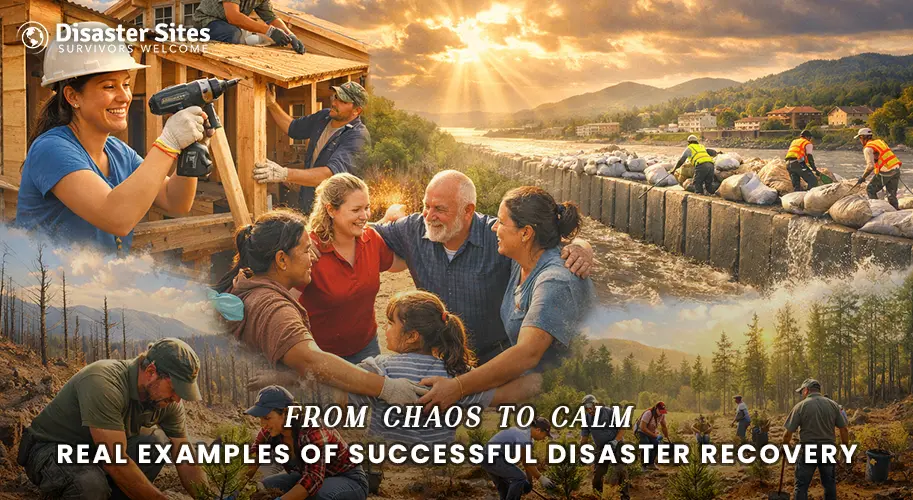
Disasters may bring chaos, fear and uncertainty, yet the recovery stories told from around the world show that hope sprouts from the ashes of crisis. From New Orleans' recovery from Hurricane Katrina, to the story of courage, commitment and resiliency in Japan after the tsunami in 2011, or Australia and Nepal's recoveries from fire or earthquakes, they tell the story of communities which rebound better.
The takeaway is clear: recovery is not simply stepping back to fix what was broken. Recovery is looking ahead, thinking about how to build back safely, creating systems of resilience, and bringing communities together. We can turn chaos into calm through good planning, strong leadership, and community collaboration.

“To assist disaster survivors by providing a source for them to come together in time of need, to aid in the listing of events, information and other forms of assistance, and continuing support through the recovery process.”

Share this page with your family and friends.