We use cookies to personalise site content, social media features and to analyse our traffic. We also share information about your use of this site with our advertising and social media partners.
FEATURED
SPONSORED
VERIFIED
Jan 27 -
8 minutes, 30 seconds
-2.3K Views 8 Comments 0 Likes 0 Reviews
Natural Disasters and man-made a host of other occurrences, from natural to man-made, know no bounds with regard to location or time interval of happening. When disasters strike, those people, families, and communities affected might lose their shelter, sustenance, and water supply, along with their very sense of safety and security. Relief and recovery begin to take precedence as the persons, families, and communities need assistance to survive and rebuild.
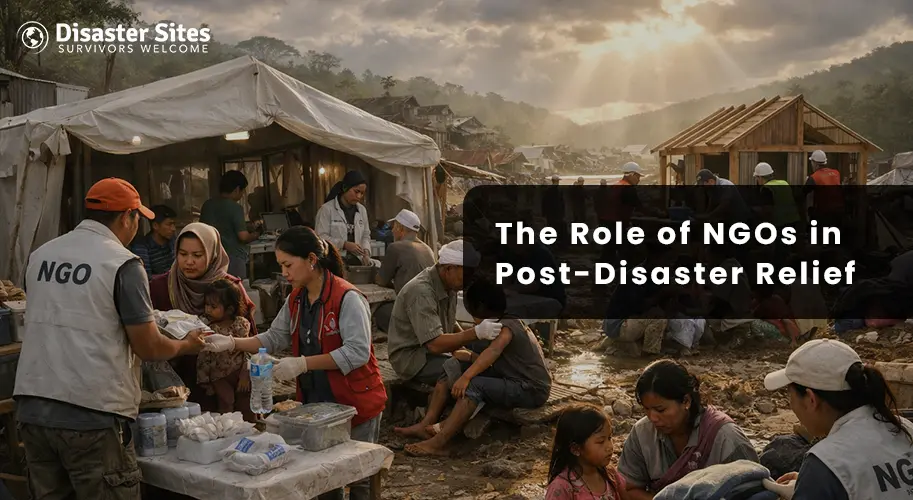
At this point NGOs play an important role. These organizations can mobilize quickly, providing assistance where it is needed most, frequently reaching places where government assistance may not be able to respond fast enough. The presence of NGOs in humanitarian assistance on the ground, provides the capacity to mobilize people and resources and forms a valuable link to recovery.
Non-profit organizations (NPOs) can often be some of the first responders after the environment experiences a disaster. NPOs are able to respond more swiftly and more flexibly than many governmental organizations because they do not have the many layers of approval that a federal, provincial, or local governmental organization must go through and are able to mobilize staff, volunteers, and resources much more quickly. This can mean the difference between life and death in the first hours and first days of disasters.
Another strength of NGOs is their reach into remote or underserved areas. In many disaster situations, rural villages or difficult to reach communities become isolated from relief efforts due to damaged roads, being flooded, or damaged infrastructure. Most NGOs are made up of local networks or volunteers who can deliver food, medicine, and shelter at incredible speed even when official organizations are having trouble getting support into the areas.
Lastly, NGOs play a bridging role. In connecting governments, international organizations, and other local organizations in the disaster response, VNR works to ensure the disaster response is operationally coordinated and doesn't duplicate efforts, and that donor resources can be utilized for maximum impact. The importance of collaboration is to minimize gaps in the operational support of the disaster survivors.
For health crises linked to disasters, explore Climate-Driven Wildfires Account for Thousands of American Deaths: New Research Unveils Shocking Toll.
Following a disaster, NGOs can serve multiple roles in recovery. Their role is not limited to providing food or drinking water, they provide assistance to communities through every step of recovery. Some core functions include:
Disaster can eliminate farms, shops, and small businesses, therefore NGOs assist people to get back on their feet by providing farmers with seeds and tools, or small cash grants. Some organizations provide training as part of skills development, and others assist survivors develop other income activities.
In the field, there are many camped-away survivors who are marginalized and lack shelter and access to critical services. Some NGOs attempt to deploy and support an immediate response in order to provide food for survival, clean drinking water, clothes to keep warm, and temporary shelter for people displaced. Emergency response can also include hygiene kits that include health essentials for hygiene such as soap, sanitizer, sanitary products for menstruating females, to limit the incidence of health issues in the camps, which can be very crowded.
Disasters usually leave widespread wounds or injuries, people inconvenienced in their medical prescriptions/location, or ill, all of which health services NGOs usually assist with. Many times these organizations will include some form of psychological counselling to help survivors cope with stress and trauma. Additionally, when there are epidemiologic diseases that have the potential for outbreak, health services NGOs will sometimes introduce vaccination campaigns and awareness of public health issues to keep the communities that are affected healthy and safe.
Following the disaster response, NGOs also began the rehabilitation and recovery field. After the bulk of the emergency response, NGOs provide assistance programs to help support the rebuilding of the damaged structure of peoples homes, schools, and hospitals. By restoring their services such as electricity, water supply, or, generally helping families and communities to restore some normalcy following the loss of everything, is an inclusive form of assistance that goes beyond essentials and basic needs.
To understand why official responses sometimes fall short, see How the Government Deals with Natural Disasters.
To better grasp the operation of NGOs in post-disaster relief, let us look at some examples:
This is vital in disaster-prone zones like those discussed in Disaster Zones Around the World: Where Danger Strikes Most Often.
NGOs are essential players in any post-disaster relief. From first arriving to provide food and water to providing medical aid, and then helping families rebuild from their destroyed houses and livelihoods, they provide relief at every phase of the entire recovery process. They are often able to reach people who are unreachable by governments and do their work at the community level so that 'no one is left behind'.
NGOs have fund challenges, logistical challenges, and coordination issues etc., but despite these challenges their dedication and ability to mobilize quickly make them one of the most trusted sources of help during major crisis events.

“To assist disaster survivors by providing a source for them to come together in time of need, to aid in the listing of events, information and other forms of assistance, and continuing support through the recovery process.”

Share this page with your family and friends.