We use cookies to personalise site content, social media features and to analyse our traffic. We also share information about your use of this site with our advertising and social media partners.
FEATURED
SPONSORED
VERIFIED
Jan 15 -
8 minutes, 35 seconds
-3K Views 54 Comments 0 Likes 0 Reviews
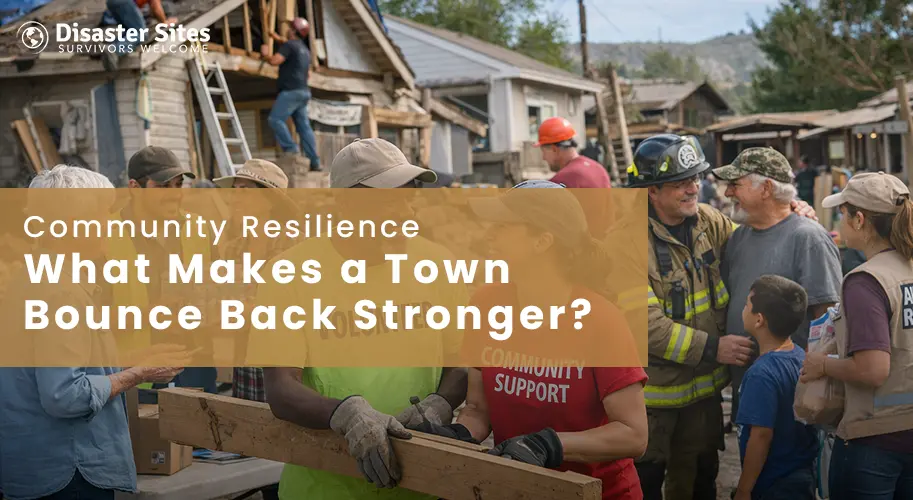
When disaster occurs, some communities respond well and recover much more quickly than others, where rebuilding a community after a disaster can take years, and largely it is a problem with community resilience - the ability for all the people, systems and institutions to face a major trauma and come back even stronger.
Community resilience is much more than just surviving a flood, fire or storm. It is how a community learns, adapts and grows from the experience of disaster. A resilient community does not just put things back to normal, it grows from disaster in much better planning and preparedness, being supportive of its people, its organizations and institutions, and being cleverer as to how it deals with future disasters.
In this blog post I will examine the essential elements of community resilience and represent why resilience is the foundation of long-term recovery.
The extent to which a community can rebound and regenerate after disaster relies upon several components or building blocks. These components become useful to enhance both people and systems, thereby making the aftermath of disaster easier and faster.
Communities/community members that take advance action have better crisis responses. Emergency plans in place, regular practicing, and padded resources prepare community members so that when disaster strikes, the immediate response will be expedient. Planning enables proactive response instead of panic and allows time to mitigate future potential problems.
A resilient community relies and draws upon trust and cooperation. The main aspects of recovery are neighbors checking in on neighbors, local organizations that either donate or provide support to others, and solid connections with family. In other words, social connections create resilience, and act as a level of safety net, as formalized help can be slow to arrive.
When communities rely on only one industry or resource, they tend to be less resilient. A diverse community economy has options for people to earn an income and provide some financial stability to their families when times are uncertain.
A community's infrastructure should be built to endure shocks. The stronger the planning and design of community systems, the more timely recovery can be achieved as services are restored.
To see how governments can support these components, check out our post “How Governments Can Improve Disaster Response Systems”.
Leadership is the foremost consideration in recovery at the municipal level. More than any other order of government, local governments are crucial for coordinating disaster response and recovery, rebuilding services and ultimately directing the recovery process on behalf of the community.
Good leadership means:
When leaders work together with residents, non-governmental organizations (NGOs) and business, the recovery process will probably be a much more coordinated and efficient one. A community with trusted leaders will have a greatly enhanced opportunity to unite and recover together as a whole.
Engagement with the community is required for recovery. When community members volunteer for recovery efforts, it usually happens faster and better. There are many different roles volunteers can do in the recovery phase. Volunteers can pack food for distribution, help with debris removal, check in on isolated neighbours, or help first responders.
Local non-profits, youth groups and faith based groups are often the first to mobilize volunteers. Through engagement they can provide immediate support and also foster a sense of community and trust. A strong culture of volunteerism shows that resilience is not just about government action, but rather neighbours helping neighbours.
Every emergency management professional knows that communities where the people engage in recovery efforts recover faster, and have stronger ties to the community that will last well after a major crisis.
Similar extreme weather events have been recorded worldwide — explore our blog on Disaster Zones Around the World: Where Danger Strikes Most Often for more insights.
Disasters impact people emotionally; they do not just destroy buildings and roads. Stress, loss, and trauma will hold up recovery if mental health is disregarded. Social support systems are just as important as rebuilding physically.
Counseling, support groups and safe community spaces can support coping with loss and uncertainty. Schools, local organizations, and health organizations serve as natural networks for providing emotional care.
When a community focuses on the mental health of its residents there will be self-motivated and hopeful residents who want to respond positively to recovery, and ultimately, a community that heals psychologically and physically will recover much quicker.
Disasters are always educational but communities that take time to look at what went wrong and what went right will be better suited for the next time.
This process of learning can involve:
In thinking back and reflecting on our experience, towns do not just cycle damaged repair. Instead it seeks to use knowledge to establish a smarter system to reduce risk and manage even better next time.
Although disasters can occur in a community that is both prepared, and united, the impact of a disaster can be mitigated. Resilience is created long before the next crisis, through effective planning, proactive leadership, social connectivity, and caring for the totality of one's clients, both in the physical and mental world.
A community doesn't go back to the same state of normally after the event, they come back better, smarter, and more aware of what future events could potentially occur. Through reflection, flexibility, and intentional relationships a community has the capability to pull the strength it needs to face obstacles and move confidently forward.

“To assist disaster survivors by providing a source for them to come together in time of need, to aid in the listing of events, information and other forms of assistance, and continuing support through the recovery process.”

Share this page with your family and friends.